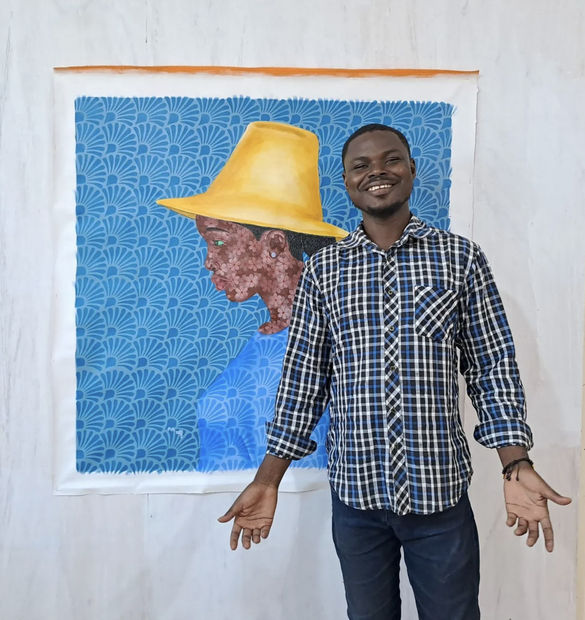
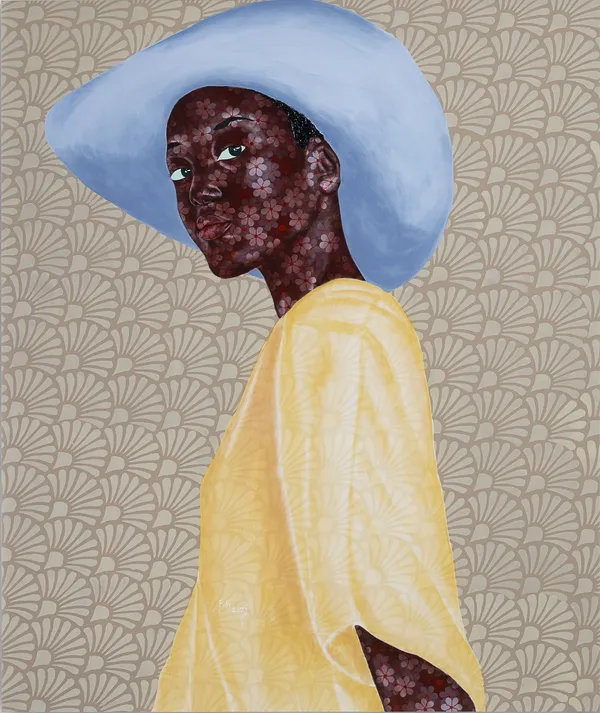
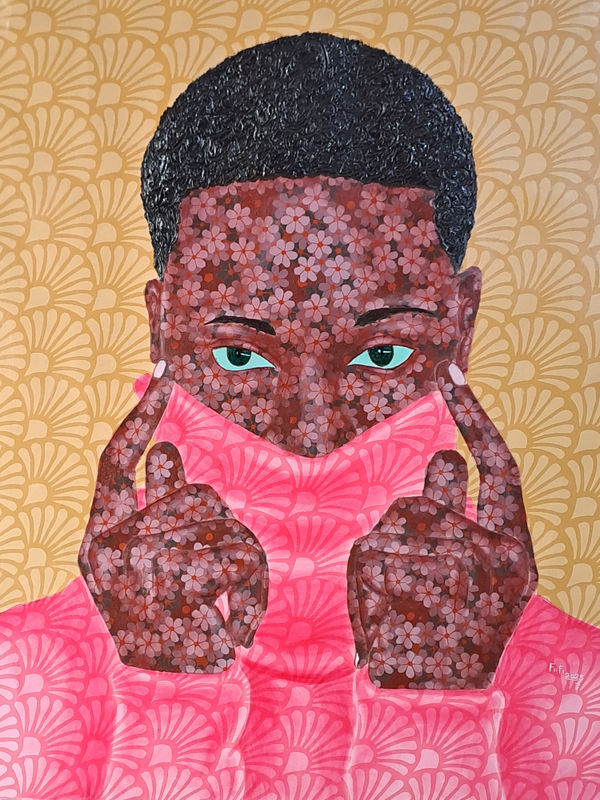
• Casterline|Goodman Gallery is pleased to present a selection of works by Seth Fiifi Afful, whose vibrant portraits combine bold color, rhythmic pattern, and powerful symbolism. Known for integrating floral motifs across both the figures and their surroundings, Afful creates compositions that blur the boundary between subject and environment while conveying a deeper message of shared humanity.

    In these works, the repeated patterns and vivid palettes create a sense of visual harmony, reinforcing the artist’s central theme of unity. Afful’s portraits are confident and direct, their subjects meeting the viewer with steady presence while the layered patterns evoke connection, resilience, and joy. This exhibition brings together a curated group of paintings that highlight the artist’s distinctive visual language and his ongoing exploration of identity, community, and togetherness.

    On view now through April 15th. To inquire about these works and others, contact us at gallery@casterlinegoodman.com.

  • Seth Fiifi Afful (b. 1990, Accra, Ghana) is a self-taught contemporary painter whose vibrant figurative works explore themes of unity,...

    Seth Fiifi Afful (b. 1990, Accra, Ghana) is a self-taught contemporary painter whose vibrant figurative works explore themes of unity, identity, and shared humanity. Living and working in Accra, Afful has developed a distinctive visual language defined by rhythmic, uniformly arranged patterns that envelop both the backgrounds and the bodies of his subjects. Through these carefully structured motifs—often floral in form—he creates luminous portraits that celebrate connection across cultures and communities.


     Afful began drawing at the age of nine and was introduced to the art world by his older brother, artist Foster Sakyiamah. Although he later pursued studies in agriculture, the natural world remained an enduring influence on his work, evident in the botanical colors and floral imagery that animate his compositions. These organic patterns symbolize the interconnectedness of people and environments, reflecting the artist’s belief that despite outward differences, humanity shares a common essence.


    Central to Afful’s practice is the idea of unity. His figures frequently feature striking green eyes and garments patterned with repeating motifs, visual devices that echo his message of collective identity and mutual belonging. By integrating the same patterns across clothing, bodies, and backgrounds, he suggests the invisible threads that bind individuals together across race, culture, and geography.